Posts

Showing posts with the label Week 3

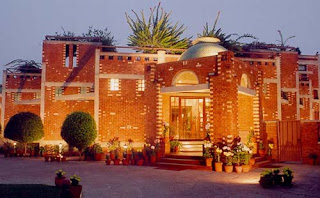
Wikipedia Trail: From Hanuman to the American Institute of Indian Studies
Image
 I began with the Wikipedia page on Hanuman since I previously read through it for this week's storytelling. It was an interesting read, and one part that caught my attention was how there was limited archaelogical evidence of the worship of Hanuman. Even though the deity played a prominent role in the Ramayna, movements dedicated to the god emerged about 1,000 years later. One of the first movements that worshipped him with significance was the Bhakti movement , and it lead me to the second Wikipedia page. This movement was influential in the social reform for Hinduism and was the catalyst for Sikhism. I was reading through the history of the Bhakti movement, and American Indologist Wendy Doniger suggested that this movement was significantly influenced by Islam, especially with the idea of surrendering to god. I was curious to learn more about Wendy Doniger , and this led me to the third Wikipedia page. Dr. Doniger was born in New York City and attended both Radcliffe College an...

Feedback Strategies: How to Give Feedback

Image
 The first article I read was titled "The Difference Between Praise and Feedback" which described the importance of avoiding generic praises. Instead, the article advocated for parents to process praise by recognizing their children's hard work and effort, rather than just the results. Furthermore, the article described the double-edged sword of praise, as it can make the affection feel conditional and become sugarcoated control. Instead, the article advocated for parents to provide feedback by asking specific questions and listening to their responses. These lessons can also be applied to classroom settings; rather than giving out compliments or just recognizing the effort put into work, feedback through questions can be a lot more valuable. Questions can demonstrate the thinking process behind the work and allow for more effective and helpful critiques. I don't think it's a detrimental thing to give out compliments and praise, but asking questions is an importa...

Topic Research: Maya

Image
After brainstorming potential topic choices last week, I feel like I'd be most interested in making my project about Maya. There are plenty of stories and examples of Maya throughout the Indian epics, but I'm also interested in analyzing the meaning of Maya through these narratives as well as comparing the ideas to contemporary philosophy. The first story that I found relevant to Maya was with Narada and Vishnu. Narada directly experienced maya as he realized his experiences were an illusion. When re-telling this story, I'd be interested in adding more details to highlight how powerful the illusion can be, and I'd want to include a section that analyzes the story's connection to specific philosophical ideals. The narrative can show how illusion grips us into a false world, which parallels the reader's experience with reality itself. The second story that I would use described Shiva's perspective of Ravana's birth and death. While the experience was sim...

Week 3 Story: Hanu the Dog

Image
There was once a teenage boy named Varun, and it was rumored that he ran faster than the wind. An expert sprinter, Varun told all that his speed was due to his loyal German Shepherd, Hanu. As a young boy, Varun adopted Hanu when he was a puppy. Both Varun and Hanu were inseparable; whether it’s playing fetch or taking a walk, Varun always spent his time taking care of Hanu. As they grew older, they fell in love with racing, and the duo would run across the winding roads. Their sprints were a sight to behold, with the whole town holding their breath in anticipation to see who won the race.   One day, Hanu woke up with a hunger to run like no other; he was pacing around the house and could barely contain his excitement. He roamed around the town searching for Varun. When he finally found him, Hanu barked and begged to race, and his excitement was infectious. After what felt like hours of whining, Varun said,   “You want to race, boy? Let’s go for a quick run. We’ll make ...

Reading Notes: Ramayana, Part A

Image
 These reading notes are over Part A of Tiny Tales of Ramayana which is written by Laura Gibbs. Style Notes:  The style of writing conveyed the essential parts of the epic without overwhelming readers with too many details. As the Ramayana is impressively long, this writing style makes the narrative accessible. However, in order to re-tell specific stories within the epic, it's important to go more in-depth and focus in on specific plot parallels. I want to avoid using the same style of the Ramayana when writing my own stories, but specific plot points can provide a strong enough bridge between both narratives. As a result, I'll probably also reference R.K. Narayan's The Ramayana to capture the whole plot before I begin writing my own story.  Since the Tiny Tales summarize a majority of the stories, most dialogue is left out. When re-telling the various stories, this provides the creative liberty to imagine the conversations and use a more modern, fluid style when writi...